
Fuel rates were last revised on February 1 when petrol price was cut by a marginal 4 paise a litre.

Petrol and diesel prices across the country will increase by 9-13 paise a litre with effect from Tuesday midnight, after the government decided to increase the commission to petrol pump dealers.

Prices have declined 18 per cent this year.
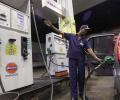
Since May 1, the dynamic fuel pricing model has been applied on a pilot basis in 5 cities
India's ambitious programme to cut oil import bill by mixing a small percentage of non-edible oil in diesel has encountered an unexpected problem.
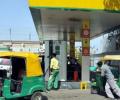
After Delhi, CNG price in Mumbai has been hiked by Rs 1.50 per kg and the rate of cooking gas piped to houses by Re 1 due to rise in input costs. Mahanagar Gas Ltd, which retails CNG to automobiles and piped natural gas to households for cooking purposes in Mumbai and surrounding cities, said the increased prices will come into effect from the intervening night of July 8 and 9.

The protesters led by the state unit Bharatiya Janata Party chief C P Thakur burnt the effigy of the prime minister at the busy Dak Bungalow roundabout.
Petrol and diesel prices will not be changed this fortnight, said a communiqué on Tuesday.

Jet fuel (ATF) price on Tuesday was hiked by 4.2 per cent but that of commercial LPG used in non-residential establishments such as hotels and restaurants was cut by Rs 115.5 per 19-kg cylinder reflecting global energy trends. Aviation turbine fuel (ATF) price was hiked by Rs 4,842.37 per kilolitre, or 4.19 per cent, to Rs 120,362.64 per kl in the national capital, according to a price notification of state-owned fuel retailers. This reverses a 4.5 per cent cut in jet fuel prices affected last month.
India's climate change goals are turning combustible. On the one hand, a protracted dispute between the government and manufacturers over subsidies threatens to slow the pace of electric vehicle (EV) sales. On the other hand, repeated assertions by different arms of the government over banning sales of new fossil fuel-fired vehicles have queered the pitch for energy investments. Before we address the issue of the recommended diesel vehicle ban in the recent report on energy transition, issued months before the next round of global climate talks begin in Dubai in November, let's look at what's at stake.

When it comes to the "all-new" Tata Altroz unveiled on Thursday, one might wonder if it's truly a complete overhaul or just a refreshed take on the familiar.

A new formula for pricing natural gas in the domestic market was determined; the decontrol of diesel prices was announced; and the scheme that directly transferred subsidies to bank accounts of users of liquefied petroleum gas (LPG) cylinders was modified and relaunched.
Plans to increase price progressively.
A Rs 3-4 a litre hike in the price of petrol, which had been freed from government control last June, is also on the cards immediately after polling in the last phase of Assembly elections is completed on May 10.

Petrol price was on Friday cut by Rs 2.42 per litre and diesel by Rs 2.25 a litre after an excise duty hike limited the benefit of global crude prices slumping to six-year low.
The domestic car market, which sees sales of almost one diesel car for every petrol car sold, will see demand for diesel-powered cars to hit the roof.

With deregulation in diesel prices, this variant does not make sense.

India is back on the diplomatic table pushing oil producing countries to raise production in a bid to cool down runaway oil prices. Brent crude oil prices traded above $90 a barrel, on Thursday, for the first time since 2014. Brent is the most popular marker for crude oil trade. It is used as a benchmark for two-thirds of the world's internationally traded crude oil.
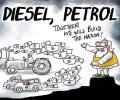
The government on Friday slapped an export tax on petrol, diesel and jet fuel (ATF) while also joining nations like the UK in imposing a windfall tax on crude oil produced locally. A Rs 6 per litre tax on export of petrol and ATF and Rs 13 per litre tax on export of diesel is effective from July 1, finance ministry notifications showed. Additionally, a Rs 23,250 per tonne tax was levied on crude oil produced domestically.

The growing rift between MSIL and rival automakers has complicated the government's efforts to finalise the CAFE norms.
Petrol, that had in April/May witnessed 11-12 per cent growth in consumption, in fact saw a six per cent fall in demand at 8,02,500 tons in June, oil ministry officials said.
Move to be aimed at reducing subsidies on the fuel.
The government has slashed the windfall profit tax levied on domestically-produced crude oil as well as on export of diesel and ATF following a drop in global oil prices, according to an official order. The levy on crude oil produced by companies such as Oil and Natural Gas Corporation (ONGC) has been cut steeply to Rs 1,700 per tonne from Rs 4,900, the order dated December 15 said. Crude oil pumped out of the ground is refined and converted into fuel like petrol, diesel and aviation turbine fuel (ATF).
Petrol price on Monday neared Rs 100-a-litre mark in the national capital after the rate was hiked yet again. Petrol price was increased by 35 paise per litre while there was no change in diesel rates, according to a price notification from state-owned fuel retailers. In Delhi, the petrol price soared to Rs 99.86 per litre. Diesel rates were unchanged at Rs 89.36.

The share of EVs in the luxury segment rose from 7 per cent in January-May 2024 to 11 per cent during the same period in 2025, marking a 66 per cent growth in the electric luxury segment.
A looming global shortage of diesel in Europe presents India with more than one opportunity to profit from strong margins. A shortage of the fuel, a key contributor to inflation, has been exacerbated by the conflict in Ukraine, and western sanctions on Russian fuel supplies. The slowdown in natural gas supply means the West needs diesel to heat their homes this winter.
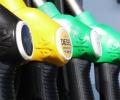
From April 2020, manufacturers will have to hike prices of diesel cars sharply to accommodate the costs incurred in the transition to BS VI emission norms, and widening the gap between a diesel and petrol car.
The government has cut the windfall profit tax on crude oil produced in the country while the levy on exports of diesel and ATF has been hiked, an official notification said. The tax, levied in the form of special additional excise duty or SAED, on domestically produced crude oil was reduced to Rs 6,700 per tonne from Rs 7,100 a tonne. SAED on the export of diesel was increased to Rs 6 per litre from Rs 5.50 a litre and on jet fuel or ATF to Rs 4 per litre from Rs 2, the notification said.
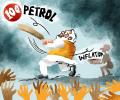
After premium petrol, the price of normal petrol has also crossed Rs 100 per litre in Rajasthan's Sriganganagar district.
After Reliance Industries Ltd and its partner bp plc of the UK, Nayara Energy - the nation's largest private fuel retailer - has started selling petrol and diesel at Re 1 less than the fuel sold by state-owned retailers, officials said. While state-owned Indian Oil Corporation (IOC), Bharat Petroleum Corporation Ltd (BPCL) and Hindustan Petroleum Corporation Ltd (HPCL) continue to hold prices despite a drop in international rates, private fuel retailers have started passing on the benefit to consumers. "To further stimulate domestic consumption and cater to local customers better, we have introduced a Re 1 discount in our retail outlets until the end of June 2023," a spokesperson for Nayara Energy said.

She charged the government with profiteering at the expense of the people, saying its duty was to help them in times of crisis and not make profits out of their hard-earned money.

The government on Monday scrapped 30-month old windfall profit tax on domestically-produced crude oil and on export of jet fuel (ATF), diesel and petrol following a decline in international oil prices. Minister of State for Finance Pankaj Chaudhary tabled a notification in Rajya Sabha scrapping the levy on crude oil produced by firms like state-owned Oil and Natural Gas Corporation (ONGC) and exports of fuels done by companies like Reliance Industries Ltd.
The auto industry, however, said any such step to impose additional taxes on the sector will not 'make sense'.
Dynamics of auto business will change if the government ends diesel subsidy to passenger vehicles.

The price of petrol is expected to come down to Rs 84.71 a litre and diesel to Rs 77.98

Profit on sale of diesel swelled to Rs 1.90 per litre as oil ministry awaits return of Prime Minister Narendra Modi to cut rates.
Petrol price on Thursday crossed the Rs 100-a-litre mark in Thane district of Maharashtra, while it was hovering a tad below that level in Mumbai, after fuel prices were raised again.
International crude oil prices may have eased but the government has no immediate plans to pass on the benefit to the consumers, as it wants to wait for the prices to stabilise further.
The government has partially deregulated diesel price allowing a hike of 40-50 paise a litre per month for retail customers and nearly Rs 11 for bulk consumers, a step that is feared will have a cascading effect on inflation.
